
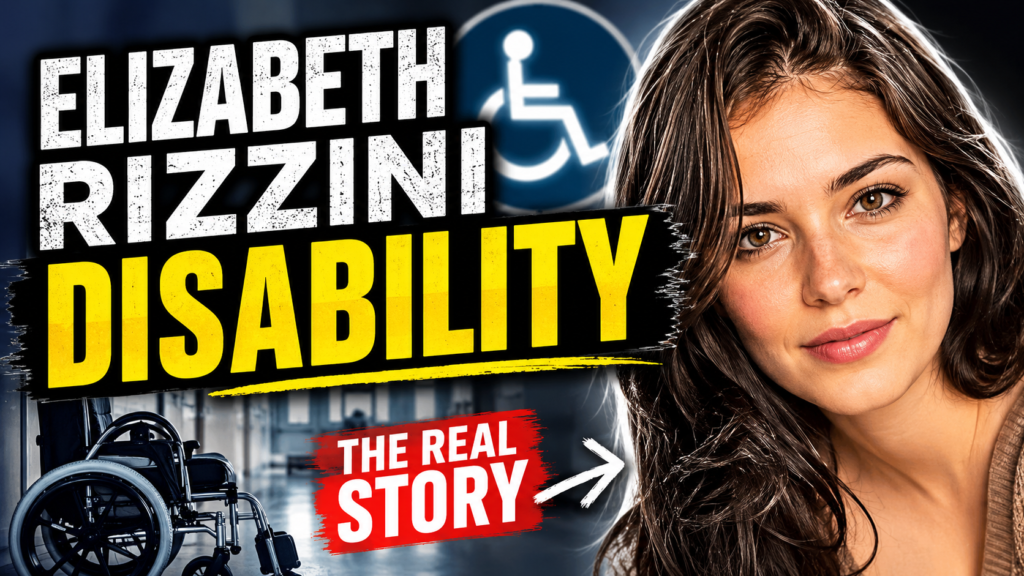

In recent years, stories of individuals who defy societal expectations and embrace their identity with courage and dignity have captured hearts around the world. One such figure whose name has resonated across communities and media platforms is Elizabeth Rizzini — a woman whose journey with disability has not only shaped her life but also inspired thousands to rethink what it means to live boldly in the face of adversity. In this article, we explore the life of Elizabeth Rizzini, her experiences with disability, her advocacy work, and the lessons her story imparts to individuals, families, employers, and society at large.
Understanding Who Elizabeth Rizzini Is
Elizabeth Rizzini is widely known today as a disability advocate, public speaker, and thought leader on inclusion. Born and raised in the United States, Rizzini’s life took an unexpected turn when she was diagnosed with a significant physical disability in her early adulthood. Rather than allow her condition to define her limits, she chose to embrace her new reality with tenacity, ultimately transforming her personal challenges into a platform for positive social change.
Elizabeth’s journey is marked by her determination to shift narratives around disability — from one of limitation to one of capability, resilience, and empowerment. Her work focuses not only on raising awareness but also on practical solutions for accessibility, equality, and dignity for people with disabilities.
The Early Life of Elizabeth Rizzini and Onset of Disability
Although Elizabeth Rizzini’s early life was filled with typical childhood experiences — schooling, family relationships, friendships — everything changed when she began experiencing unexplained physical symptoms in her twenties. After a rigorous medical evaluation, she was diagnosed with a progressive neuromuscular disability that would gradually and permanently impact her mobility.
Initially, the diagnosis was devastating. The emotional impact of confronting a lifelong disability cannot be understated; studies show that individuals experiencing significant changes in physical ability often undergo emotional trauma, grief, and adjustment challenges. For Elizabeth, this transition was no different, yet it became a turning point that would shape her future advocacy.
She underwent extensive rehabilitation, learned adaptive strategies, and gradually pivoted toward educational and vocational pursuits that allowed her to remain active, engaged, and empowered. Early in her transition, she developed an acute awareness of the many barriers — physical, social, and economic — that people with disabilities routinely encounter.
Confronting Challenges: Physical and Social Barriers
Life with a disability inherently involves navigating a world that is not always designed to accommodate diverse needs. For Elizabeth Rizzini, this meant confronting structural barriers — inaccessible public spaces, workplaces that lacked accommodation policies, and social environments that underestimated the potential of individuals with mobility or sensory impairments.
Her personal experiences illuminated a harsh reality: while legislation such as the Americans with Disabilities Act (ADA) exists to promote equal access, enforcement and actual practice often fall short. Many public and private institutions lacked not only the infrastructure for accessibility but also the cultural awareness necessary to treat disability with respect and dignity.
What made Elizabeth’s journey distinct was her refusal to accept these barriers as immutable. Instead, she chose to advocate for systemic change. She frequently spoke publicly about her experiences — emphasizing both the external obstacles and the internal strength required to overcome them. Elizabeth transformed her personal narrative into a broader call for social justice, equity, and empathy.
Advocacy Work and Public Involvement
Elizabeth Rizzini’s advocacy efforts span multiple sectors, including education, employment, public policy, and media representation. Her work seeks to:
- Raise Awareness — Educating people about the realities of living with a disability and dispelling stereotypes.
- Promote Accessibility — Advocating for physical, technological, and institutional accessibility improvements.
- Support Inclusive Policy — Working with lawmakers and organizations to strengthen disability rights legislation.
- Mentor Individuals with Disabilities — Providing guidance and support to others navigating similar experiences.
One of her major contributions has been fostering dialogues between disability advocates and private-sector employers. By partnering with companies interested in inclusive hiring practices, Elizabeth helped develop recruitment strategies that value diverse abilities and promote meaningful employment for people with disabilities.
She has also worked closely with schools and universities to ensure that young people with disabilities receive equitable education opportunities. Her advocacy emphasizes not only compliance with accessibility laws but also the creation of learning environments that affirm the potential and dignity of every student.
Impact on Disability Perceptions and Media Representation
Media representation plays a critical role in shaping public perceptions. Historically, narratives about disability were limited to stereotypes — portrayals of individuals as tragic, pitiable, or inspirational solely because of their disability. Elizabeth Rizzini challenged these narrow narratives by telling her story in a way that centered on authenticity rather than pity.
Her appearances in interviews, podcasts, and public speaking engagements consistently highlight the following themes:
- Agency over Anxiety: Disability does not equate to helplessness.
- Complexity over Simplification: People with disabilities live full and varied lives, rich with achievements, relationships, and goals.
- Accessibility over Assumption: Society must prioritize practical solutions over surface‑level acceptance.
Her articulate and thoughtful engagement with media not only humanized her experiences but also provided audiences with opportunities to rethink deep‑seated biases. Academic research supports the notion that when people with disabilities are represented in diverse, empowered roles — in media, leadership, and industry — public attitudes shift toward inclusion.
Elizabeth Rizzini’s Contributions to Inclusive Education and Employment
One of Elizabeth’s most lasting legacies is her work in inclusive education and workforce participation. Through workshops, consulting, and partnerships, she has helped institutions rethink their approach to accessibility.
Inclusive Education
In schools and universities, Elizabeth advocates for:
- Adaptive learning tools and technologies.
- Universal design principles that anticipate diverse needs.
- Support systems that empower students rather than segregate them.
- Teacher training that builds disability competence and awareness.
Her influence in educational reform aligns with research that shows inclusive education not only benefits students with disabilities but enhances learning environments for all students.
Workplace Inclusion
Elizabeth has been vocal about the need for companies to move beyond token inclusion toward intentional employment practices that welcome people with disabilities as valued contributors. Through keynote talks and corporate training sessions, she promotes:
- Disability‑confident hiring strategies.
- Workplace accommodations that enhance productivity.
- Leadership development programs for employees with disabilities.
- Inclusive corporate policies that foster belonging.
Her message is clear: accessibility in the workplace is not a charity; it is an investment in diverse talent and sustainable success.
Intersectionality: Disability, Gender, and Community Engagement
Elizabeth’s advocacy also intersects with broader conversations about gender, identity, and community engagement. She emphasizes that disability cannot be separated from other dimensions of identity — including gender, ethnicity, socioeconomic status, and cultural background. Her work highlights that:
- Women with disabilities face compounded biases in both gender and ability.
- Access to healthcare, opportunity, and support varies widely across communities.
- Advocacy must acknowledge and address these overlapping challenges to be truly equitable.
By centering intersectionality, Elizabeth has helped build coalitions across movements — bringing together disability rights with women’s empowerment, racial justice, and economic inclusion.
Lessons from Elizabeth Rizzini Disability Advocacy
Elizabeth Rizzini’s life and work offer profound lessons for individuals and society:
1. Disability Is Not a Limiting Label
Elizabeth’s story challenges the notion that disability defines ability. While her condition shaped her experiences, it did not curtail her potential to influence, lead, and contribute meaningfully.
2. Advocacy Begins with Personal Storytelling
Elizabeth harnessed the power of her own narrative to illuminate broader systemic issues. Her vulnerability became a source of strength — educating others and fostering empathy.
3. Accessibility Benefits Everyone
When public spaces, digital platforms, and policies embrace inclusive design, the result is a more equitable society — not just for people with disabilities but for all.
4. Inclusion Is Active, Not Passive
True inclusion requires intentional choices — from policy implementation to cultural attitudes. Accessibility cannot be an afterthought; it must be embedded in the planning and execution of services, products, and institutions.
5. Intersectionality Matters
Elizabeth’s emphasis on intersectional advocacy reminds us that addressing disability rights without considering race, gender, and socioeconomic context leads to incomplete solutions.
The Broader Social Impact of Her Work
Beyond the individuals she directly mentors and educates, Elizabeth’s advocacy has contributed to broader social change:
- Public Policy Engagement: Her influence in local and national dialogues has helped shape public policy discussions about accessibility and civil rights.
- Corporate Inclusion Strategies: Employers increasingly adopt disability‑inclusive practices as a result of advocacy efforts like hers.
- Community Awareness: Schools, nonprofits, and civic organizations now approach disability with greater nuance and empathy.
- Media Representation: Elizabeth’s media presence has contributed to more accurate and respectful portrayals of disability in public discourse.
Her long‑term impact lies not just in what she has achieved but in how she has inspired others to carry forward the work of inclusion and equity.
Conclusion: The Legacy of Elizabeth Rizzini Disability Advocacy
The story of Elizabeth Rizzini Disability is a testament to the power of resilience, courage, and purpose. Elizabeth turned a life‑altering diagnosis into an opportunity for meaningful impact — reshaping perceptions, influencing policies, and empowering others with disability to live authentically and ambitiously.
Her journey underscores that disability is not merely a physical condition — it is a lived experience shaped by society’s willingness to accommodate, respect, and embrace diversity. Through her advocacy, Elizabeth reminds us that inclusive communities are stronger, more innovative, and more just.
As we reflect on her contributions, the lesson is clear: every individual — regardless of ability — deserves access, dignity, and the chance to contribute to a society that values all voices.